Ghana is taking a bold, historic leap into automated traffic management. With the rollout of TRAFFITECH-GH by the Ghana Police Service and the Motor Traffic and Transport Division (MTTD), automated cameras, sensors, and speed-measurement devices are designed to capture violations from red-light jumping to unauthorized passenger pick-ups and automatically issue Electronic Notices of Violation (ENVs) via SMS.
On paper, TRAFFITECH-GH represents a visionary modernization of road safety. But on the asphalt, high-tech algorithms are colliding with a messy physical reality: the digital system is ready, but the physical bus stop is not.
Where Did the Bus Stops Go?
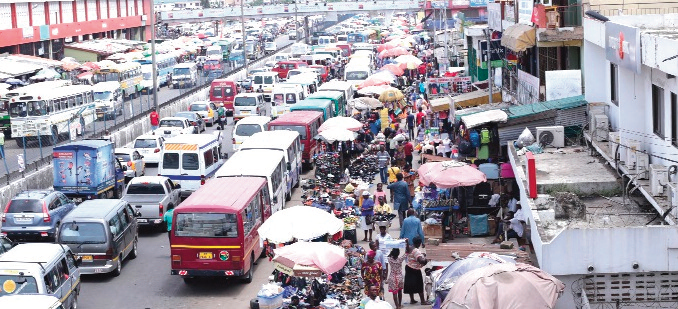
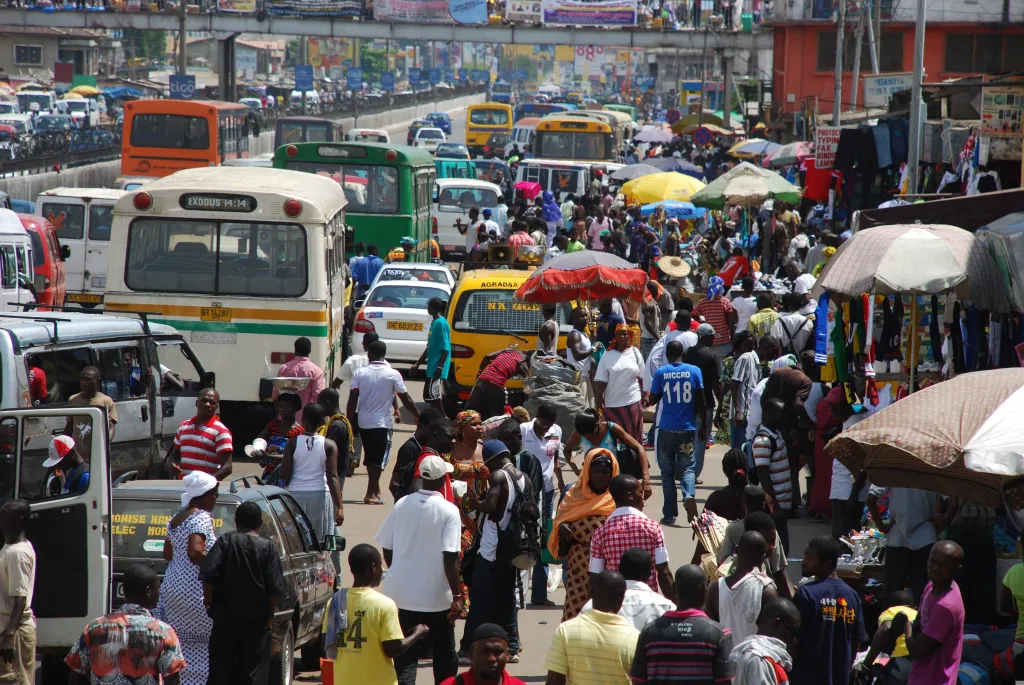
Under Road Traffic Regulation L.I. 2519 (Regulation 142), trading, selling, or displaying goods on road shoulders, pedestrian walkways, and designated bus stops is strictly prohibited. Yet across major transit corridors from Kwame Nkrumah Circle, Kaneshie, and Madina in Accra to Kejetia in Kumasi and Takoradi Market Circle designated bus stops and loading bays have been systematically transformed into open-air markets.
Traders, market women, and hawkers occupy the exact spaces reserved for commercial vehicles to pull over safely. As the Ghana Private Road Transport Union (GPRTU) forcefully highlighted in a recent national declaration, commercial drivers now face an impossible dilemma:
"How can you punish a driver for not stopping at a designated bus stop when that bus stop has been occupied by market women and traders? How can a driver be fined for obstruction when traders have left him no space to operate?"
When designated stops are blocked by wooden kiosks, display trays, and pedestrian spillover, drivers are forced to stop in active traffic lanes to pick up or discharge commuters. Under TRAFFITECH-GH's automated lens, this instantly registers as an illegal stop, triggering fines and daily 1% default penalties against the vehicle owner. As union leaders plainly stated: "We cannot digitalize illegality".
No Data on What a "Real" Bus Stop Is
Beyond the physical encroachment lies a deeper, systemic void: there is virtually no official, centralized digital data defining where Ghana's bus stops actually exist.
While formal BRT initiatives elsewhere rely on paved shelters and fixed schedules, West African paratransit operates across a massive $100 billion "Data Desert". Over 85% of urban passenger trips rely on trotros, whose stopping points are governed by informal, unwritten street logic landmark junction names like "Atomic Junction", specific roundabouts, or informal "Si me ha" (drop me here) requests.
Municipal assemblies have historically failed to provide adequate, clearly marked, and digitally mapped loading bays along major corridors. Instead:
- Faded Markings & Invisible Signage: Stop lines and bus bay demarcations have long worn away, leaving drivers to guess where legal enforcement boundaries begin and end.
- Unmapped Informal Hubs: Thousands of daily embarkation points exist solely in the collective memory of commuters and mates, completely invisible to formal municipal GIS databases or global navigation maps.
- Enforcement Without Definition: TRAFFITECH-GH cameras are calibrated to fine drivers for "wrongful stopping," yet municipal authorities have not provided standardized, geotagged GTFS (General Transit Feed Specification) data defining legal stopping coordinates for the informal sector.
Fining a driver for missing a bus stop that has no visible sign, no clear bay, and no digital coordinate definition creates an unfair punitive trap rather than an orderly transit system
Paratransit Flying Blind
This structural data deficit forces paratransit operators to navigate blindly every single day.
Trotro drivers, mates, and station executives manage multi-million-cedi transit operations without real-time visibility into passenger demand, queue lengths, or corridor traffic flows. Without dynamic demand intelligence or structured dispatching:
- Drivers Roam and Idly Circle: To find passengers, drivers circle busy intersections, slowing down trailing traffic and hunting for commuters standing near market crowds.
- Peak-Hour Supply Collapses: Vehicles wait empty at unstructured dirt-lot terminals while massive, unseen queues build up just a few miles away at unmapped roadside junctions.
- High-Stress Scrambles: Commuters and mates engage in daily physical hustles for seats, creating roadside chaos that inevitably spills into vehicular traffic.
Automated enforcement cameras record the resulting congestion and illegal stops, but they treat the symptom of a broken data ecosystem as a criminal offense, while ignoring the root cause the total absence of transit intelligence.
Bridging the Gap: Ground-Truth Intelligence Before Algorithms
Automation relies on precision, and digital enforcement cannot succeed without physical and informational infrastructure. To prevent TRAFFITECH-GH from devolving into a source of friction between the state and transport unions, three urgent steps are required:
- Clear and Reclaim Designated Transit Bays: As GPRTU demanded, municipal authorities must strictly enforce road traffic regulations to clear traders and hawkers from bus stops, walkways, and intersections before penalizing drivers.
- Build Ground-Truth GTFS Data Infrastructure: The informal transit "Data Desert" must be mapped. Innovators in the local tech space such as Trotro.digital are demonstrating how AI models, local language copilots (Ask Kweku), and mates acting as "human sensors" can convert chaotic street stops into structured GTFS route maps, clear fare directories, and digital terminal "Control Towers".
- Synchronize Enforcement with Reality: Municipal assemblies, the DVLA, the Police MTTD, and transport unions must collaborate to formally digitize legal loading zones, making these coordinates publicly accessible to drivers and mapping applications alike.
TRAFFITECH-GH is undeniably the right direction for Ghana’s future. But before we penalize commercial drivers through automated cameras, we must give them physical space to stop, clear visual signs to follow, and the digital data necessary to navigate the city with order and dignity
Open mic 0
No comments yet. Start the conversation.