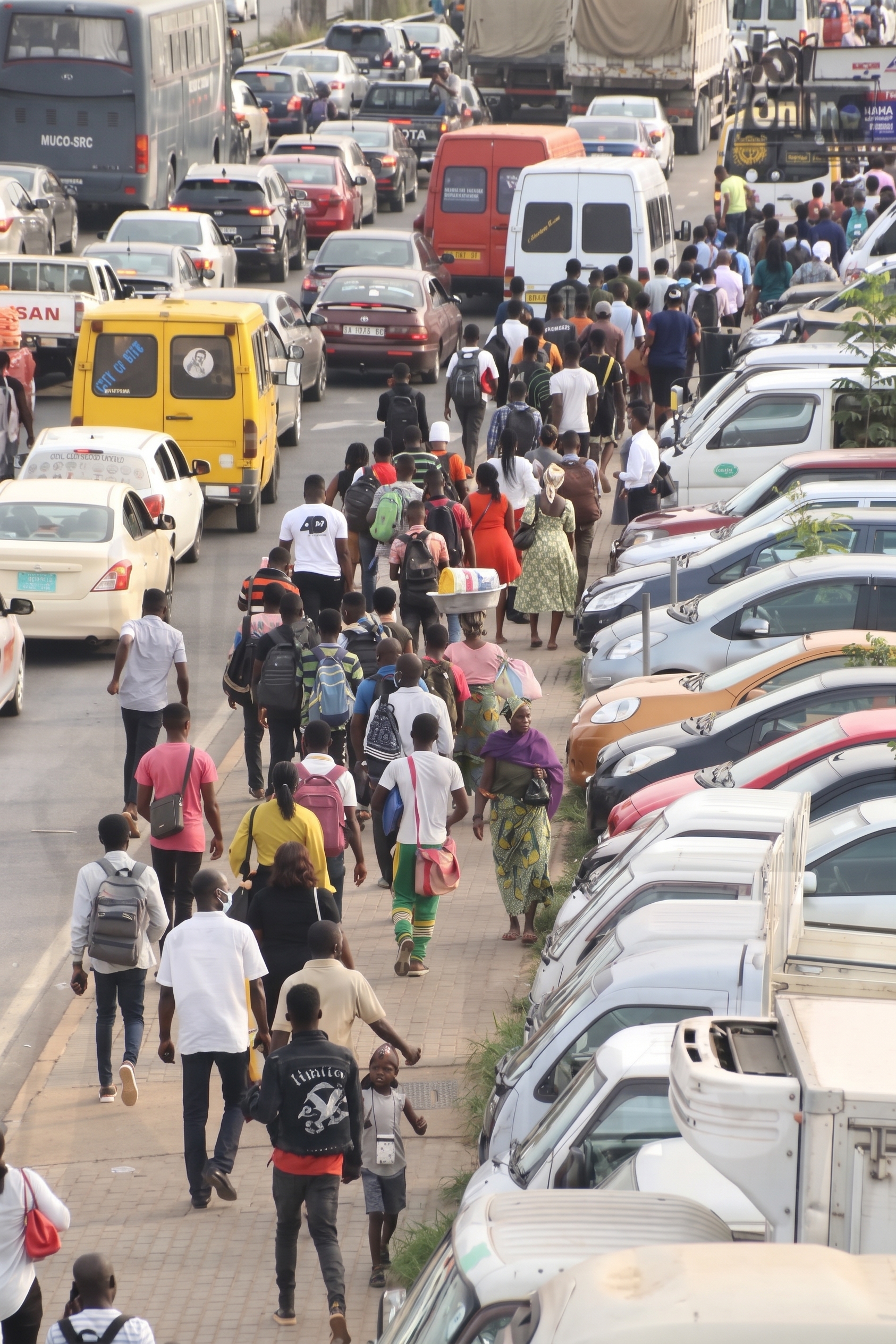
Commuters across Ghana’s urban centers face an unprecedented transit shutdown tomorrow, Wednesday, November 4, 2026, as major commercial transport unions unite to pull all commercial vehicles off the roads in protest against the rollout of TraffiTech-GH.
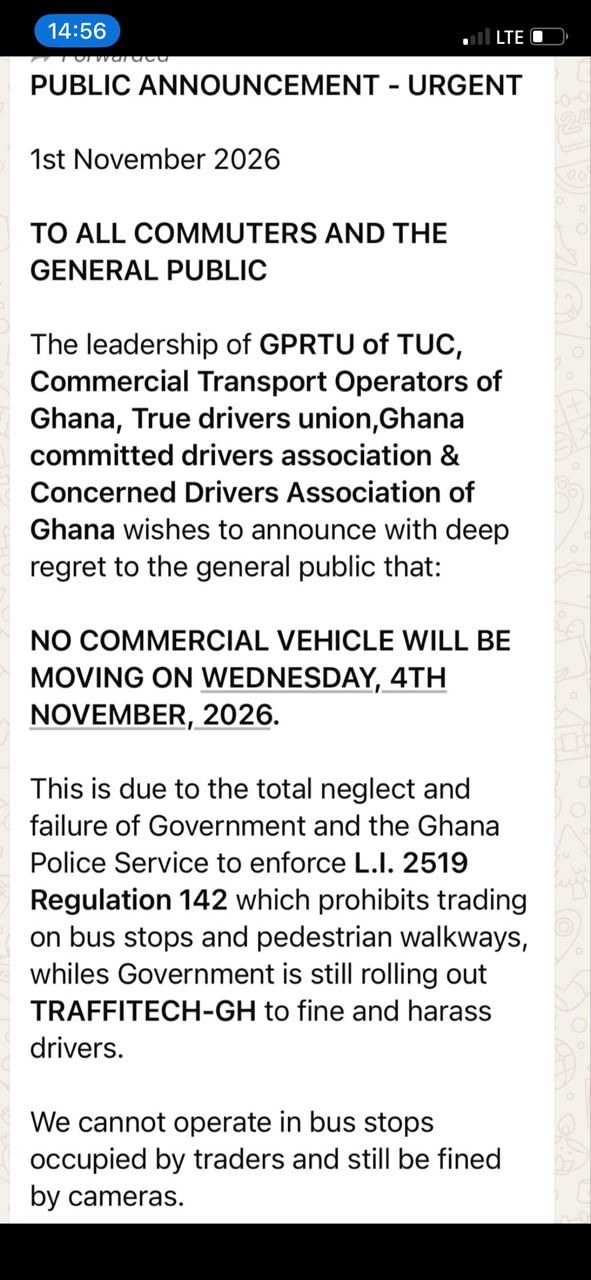
Just days after the digital traffic enforcement system officially went live on November 1, the ambitious smart-mobility agenda has collided directly with the harsh spatial realities of Ghana’s streets. In a joint declaration issued by the Ghana Private Road Transport Union (GPRTU of TUC), Commercial Transport Operators of Ghana, the True Drivers Union, the Ghana Committed Drivers Association, and the Concerned Drivers Association of Ghana, driver leadership confirmed that no trotro, shared taxi, or commercial bus will operate.
The Catalyst: Cameras vs. Encroached Bus Stops
The driver unions’ grievance exposes a glaring structural gap in the digitization push: while automated cameras are now issuing digital fines for stopping outside designated bays, the bus stops themselves remain occupied by street vendors.
Union leadership points directly to the non-enforcement of L.I. 2519, Regulation 142 the statutory provision prohibiting trading on pedestrian walkways and designated bus stops.
"We cannot operate in bus stops occupied by traders and still be fined by cameras," the joint union statement emphasized, citing a systemic failure by municipal authorities and the Ghana Police Service to clear transit lanes before activating punitive digital oversight.
For commercial drivers operating on razor-thin daily margins, automated citations for picking up or dropping off passengers on carriageways when the curb itself is physically blocked by market stalls and hawkers represent an existential financial threat rather than genuine road safety reform.
Actionable Commuter Advisory: Preparing for Wednesday, Nov 4
With transit operators standing firm on their sit-down strike, mobility across major arteries; including the Kwame Nkrumah Circle, Kaneshie, Madina, Lapaz, and Central Business Districts nationwide; will be severely constrained.
If you depend on public transit, take immediate precautions:
- Pivot to Remote Work: If your employer allows flexible working arrangements, request to work from home on Wednesday to avoid peak-hour transit gridlock.
- Pre-Book Alternative Mobility: Ride-hailing platforms (Uber, Bolt, Yango) will see surging demand, extreme surge pricing, and driver shortages. Schedule trips in advance or partner with colleagues and neighbors for private carpooling.
- Anticipate Severe Private Traffic: With private vehicle owners taking to the roads to fill the transit void, expect elevated congestion across primary arterial corridors.
- Reschedule Non-Essential Travel: Defer cross-town errands, municipal visits, and non-urgent cargo dispatch until normal operations resume.
The Urbans Africa Perspective
Digitizing traffic law enforcement is an essential pillar of building modern, safe, and efficient African megacities. However, technology cannot bypass urban planning realities.
Enforcing digital penalties through TraffiTech-GH without first reclaiming physical road infrastructure for public transit turns automated compliance into an unfair revenue trap for the very drivers moving our cities. Until local assemblies clear designated bus bays and enforce urban zoning laws in tandem with camera deployment, the digital transition risks stalling the pulse of the city itself.
Open mic 0
No comments yet. Start the conversation.